How to Travel Safely with a Pet Bird
Learn how to travel with a pet bird safely, from choosing a secure carrier and planning vet checks to managing car rides, flights, and arrival.
A calm, safety-first approachThis guide provides general education. Contact your veterinarian when symptoms are painful, persistent, or unusual.
- 1
Plan the journey around your bird’s needs
Step 1: Decide whether taking your bird is the safest option, considering the journey length, your bird’s comfort with handling, and the conditions at your destination. For a short holiday, a trusted bird sitter may be less stressful than unfamiliar accommodation or a complicated flight, especially if your bird struggles with changes in routine. Before a long trip, international journey, or flight, arrange an appointment with an avian veterinarian and discuss your bird’s health, travel history, and any special care needs. If your bird has changes in appetite, droppings, breathing, activity, or balance, seek veterinary advice before leaving rather than assuming travel will be manageable. Check current entry rules with the relevant government authorities, including any health certificates, identification requirements, quarantine arrangements, or restrictions affecting your bird’s species. Confirm that every accommodation and transport provider accepts your particular bird, because a general pet-friendly policy may apply only to cats and dogs. Build an itinerary with manageable travel periods, backup accommodation, and contact details for avian or emergency veterinary services along the route and near your destination.
- Avian veterinary contact details
- Destination and transit requirements
- Written accommodation confirmation
- Species and ownership documents
Good to know: Keep digital and paper copies of essential documents, and check how recently any required health certificate must have been issued.
- 2
Choose and prepare a secure travel carrier
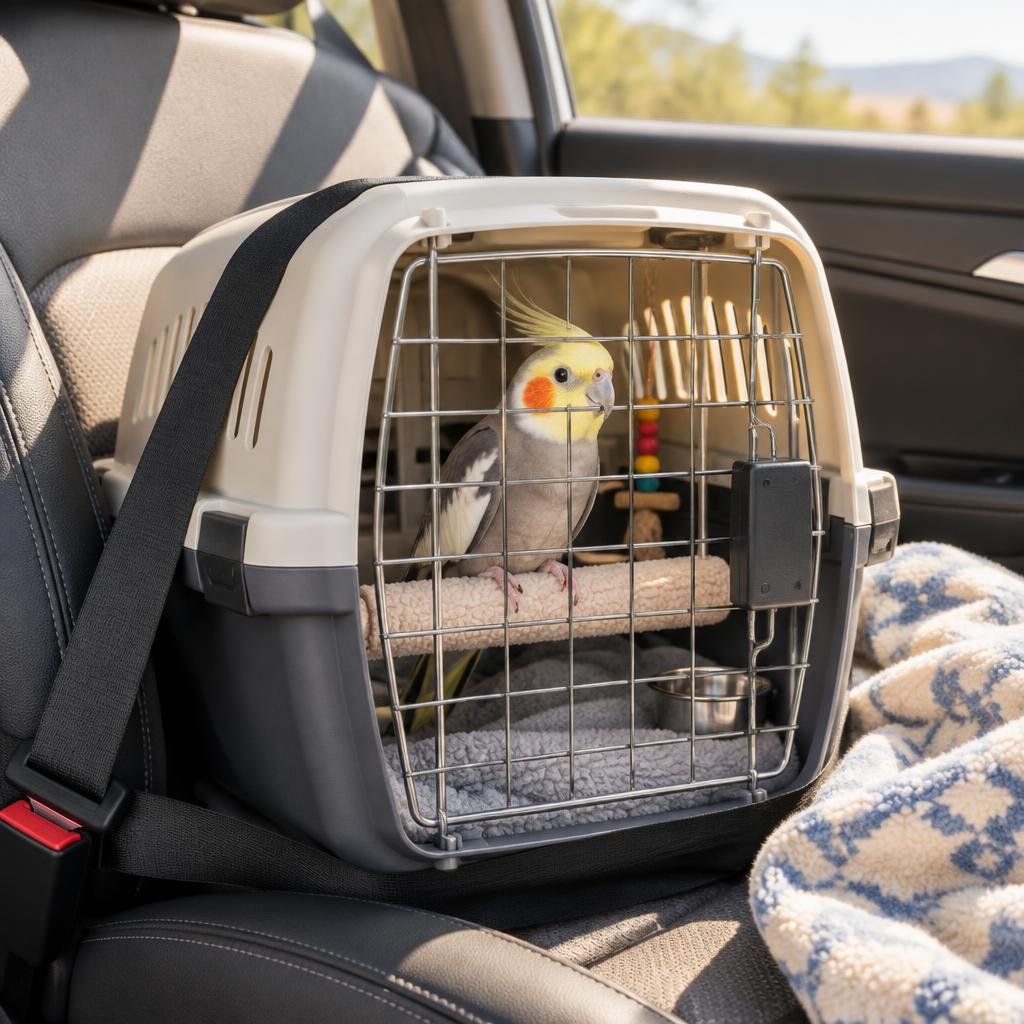
Step 2: Choose a sturdy, well-ventilated bird carrier with secure closures, species-appropriate bar spacing, and no gaps that could trap your bird’s head, toes, or beak. It should allow your bird to stand naturally and turn around without crowding its tail or wings, while keeping the travel environment stable and manageable. Inspect doors, hinges, fasteners, and accessible materials carefully, particularly if your bird is a strong chewer that can manipulate simple latches. Fit a securely mounted, appropriately sized perch low enough to reduce the risk of injury during sudden movement, unless your veterinarian recommends a different arrangement. Line the base with plain paper towels or another safe paper liner so you can replace soiled material easily and monitor droppings throughout the journey. Remove swings, heavy hanging toys, and loose objects that could strike your bird or become entanglement hazards during braking or turbulence. Label the carrier with your contact details and a backup contact, and remember that airline travel may require a carrier meeting additional specifications.
- Secure, bird-resistant door closures
- Unobstructed ventilation
- Firmly attached low perch
- Clean, replaceable paper liner
- Visible emergency contact label
Good to know: Prepare the carrier well before departure so there is time to fix rattling fittings, awkward access, or any escape risk.
- 3
Build confidence with gradual practice
Step 3: Introduce the carrier at home several days or weeks before travel, placing it somewhere familiar where your bird can investigate without pressure. Secure the door open during supervised introductions, and use praise or small pieces of a familiar favorite food to reward calm interest. Encourage voluntary entry where possible, then progress to briefly closing the door while remaining nearby and watching your bird’s response. Once your bird settles comfortably, practice lifting the carrier, walking a short distance, and sitting together in a parked vehicle with the temperature controlled. Move on to short drives with another adult observing the bird if possible, extending the duration only when your bird remains reasonably comfortable. End a session or return to an easier stage if your bird repeatedly crashes against the carrier, becomes highly agitated, or cannot settle after the activity stops. Keep handling calm and predictable, and ask an avian veterinarian for advice if persistent travel distress makes necessary journeys difficult.
- Explore the carrier voluntarily
- Rest inside with the door closed
- Practice gentle lifting
- Sit in a parked vehicle
- Try a brief, quiet drive
Good to know: A successful practice session can be very short; finish while your bird is calm rather than pushing for a longer session.
- 4
Pack familiar food and essential supplies
Step 4: Pack your bird’s usual food in clearly labeled, sealed containers, bringing enough for the planned stay plus a reasonable allowance for delays. Avoid making sudden diet changes before departure, and ask your veterinarian about feeding arrangements if your bird has special needs or the journey will be lengthy. Bring drinking water, familiar food and water containers, spare liners, paper towels, and suitable cleaning supplies that can be used away from the bird. Choose securely attached dishes that you can service safely, and use a travel drinking bottle only if your bird already knows how to drink from it reliably. Fresh foods should be familiar, permitted across any borders, and kept appropriately chilled until offered, with uneaten perishable portions removed promptly. Pack any prescribed medication in its original labeled container and follow your veterinarian’s instructions, without adding sedatives, calming products, or other treatments on your own. Include a recent photograph, identification details, relevant veterinary records, and a small towel for emergencies, while remembering that supplies do not replace professional care.
- Usual food and drinking water
- Familiar, secure feeding dishes
- Spare liners and cleanup supplies
- Veterinary records and prescribed medication
- Recent photograph and identification details
Good to know: Separate a small travel-day kit from your main luggage so water, food, liners, and emergency contacts are easy to reach.
- 5
Set up the vehicle before loading your bird
Step 5: Bring the vehicle to a comfortable temperature before carrying your bird outside, and keep exposure to extreme heat, cold, rain, or wind as brief as possible. Place the carrier in a stable position away from active airbags and secure it using the carrier manufacturer’s recommended restraint method. Do not assume that threading a seat belt through a carry handle is safe, because some handles and lightweight carriers are not designed for that load. Keep the carrier out of direct sunlight and away from strong air vents, checking that luggage cannot slide into it or block its ventilation. Maintain clean air by avoiding smoking, vaping, air fresheners, aerosol sprays, and other strong fumes inside the vehicle. If a partial cover helps your bird settle, use a light, breathable material over only part of the carrier and keep airflow and observation unobstructed. Keep your bird inside the closed carrier whenever the vehicle is moving, since even a tame bird can become startled, distract the driver, or be injured during sudden braking.
- Comfortable temperature before loading
- Carrier secured as instructed
- No direct sun or blocked vents
- No loose luggage beside the carrier
- Smoke-free and fragrance-free cabin
Good to know: Check the temperature where the carrier sits, not just at the dashboard; a sunny rear seat can feel much warmer.
- 6
Confirm flight arrangements well in advance
Step 6: If you are flying, contact the operating airline before purchasing tickets and confirm that it accepts your bird’s species on every flight segment. Ask about cabin availability, carrier dimensions, booking limits, required paperwork, and any restrictions at connecting airports or your destination. Whenever possible, choose an itinerary with fewer transfers and obtain written confirmation of your bird’s reservation, rather than relying solely on a general website policy. If cabin transport is unavailable, discuss the proposed arrangements with your avian veterinarian and the airline’s live-animal team before deciding whether to proceed. Check the departure airport’s security procedures in advance, and request private screening if your bird must be removed from its carrier to prevent escape in an open terminal. Never place your bird through an X-ray scanner, and follow screening staff instructions while keeping the bird securely contained whenever possible. On travel day, allow extra time, keep paperwork accessible, and do not use sedatives unless specifically prescribed for your bird by a veterinarian.
- Acceptance confirmed for each flight
- Carrier requirements checked
- Bird reservation documented
- Security screening plan prepared
- Required original documents accessible
Good to know: Reconfirm arrangements shortly before departure, because aircraft changes or revised policies can affect animal transport.
- 7
Monitor comfort and respond promptly to problems
Step 7: During the journey, check your bird regularly for posture, breathing, alertness, food intake, and droppings, using a passenger’s help when available so the driver remains focused. Schedule safe stops appropriate to the journey and your bird’s needs, and offer fresh water and familiar food without leaving the carrier open. Never leave your bird unattended in a parked vehicle, even briefly or with the windows cracked, because conditions can become dangerous quickly. If you need to open the carrier for essential care, first move to a fully enclosed, escape-proof space with doors and windows shut and all fans switched off. Persistent open-mouth breathing, pronounced tail movement with breathing, collapse, bleeding, repeated vomiting, or inability to perch requires urgent veterinary advice rather than a wait-and-see approach. If you suspect overheating, stop travel safely, move your bird into a comfortably cool and well-ventilated environment, and contact a veterinarian without using ice baths or forcing water into its beak. Do not attribute unusual quietness or reduced eating automatically to stress; contact an avian veterinarian promptly when behavior differs noticeably from your bird’s normal pattern.
- Observe without distracting the driver
- Refresh food and water safely
- Replace wet or soiled liners
- Keep veterinary contacts within reach
- Seek urgent help for serious warning signs
Good to know: Note when your bird last ate, drank, and passed droppings so you can give the veterinarian useful information if concerns arise.
- 8
Create a bird-safe space at your destination
Step 8: Inspect the destination before opening the carrier, making sure doors and windows are closed, ceiling fans are off, and other pets cannot enter the room. Look for hazards such as open water containers, accessible electrical cords, toxic plants, smoke, scented products, and fumes from cooking or cleaning. Keep your bird well away from kitchens, particularly where overheated nonstick cookware or appliances could release dangerous fumes, and ask hosts about planned activities before settling in. Set up a secure cage suitable for your bird’s normal movement and rest, rather than relying on a small travel carrier as accommodation for an extended stay. Place the cage in a quiet area away from drafts, direct sun, busy doorways, and unfamiliar animals, then provide the usual food and fresh water. Give your bird time to settle and maintain its familiar sleep and feeding schedule as closely as practical, postponing introductions or handling by visitors. Avoid contact with resident birds or shared equipment, and ask your avian veterinarian about appropriate separation and disease-prevention precautions if other birds live at the destination.
- Doors and windows secured
- Fans off and other pets excluded
- Cooking and cleaning fumes avoided
- Suitable cage ready for the stay
- Familiar food and water available
Good to know: Tell hosts that sprays, scented candles, smoking, and nonstick cooking fumes can put birds at risk before you arrive.
- 9
Watch recovery and prepare for the next trip
Step 9: After arrival and again after returning home, observe your bird’s appetite, droppings, breathing, balance, and usual social behavior while allowing quiet recovery time. Offer familiar meals, fresh water, and a predictable routine, without forcing interaction or trying to compensate for the journey with excessive treats. Contact an avian veterinarian promptly if your bird eats less than usual, seems weak, has ongoing droppings changes, or shows any other concerning change, and seek urgent care for breathing difficulty or collapse. Clean the carrier and dishes with bird-appropriate products, following label directions for rinsing and drying and keeping your bird away from cleaning fumes. Inspect perches, latches, and carrier panels for damage before storing the equipment where it will remain clean and dry. Record what worked, including the carrier position, practice sessions, stop locations, and accommodation setup, so you can repeat the safest arrangements next time. If travel remained distressing despite preparation, discuss future options with your veterinarian and consider an experienced bird sitter instead of assuming your bird will simply get used to it.
- Monitor normal eating and behavior
- Restore familiar daily routines
- Clean and inspect travel equipment
- Record useful travel lessons
Good to know: Keep your packing list and verified veterinary contacts together, but recheck opening hours and travel requirements before every journey.

Ask about this guide
Leave a comment or a question about your own pet and the Pawlito assistant replies right away with practical next steps.